
Giles County Sex Offender Checks
The Virginia Sex Offender and Crimes Against Minors Registry is the authoritative starting point. Giles County does not run a separate public registry. Virginia State Police, or VSP, maintains the state system under Title 9.1, Chapter 9 of the Virginia Code. The Giles County Sheriff's Office handles local registration and compliance routing, but its current site does not publish a dedicated search, appointment schedule, fee, or alert app. Call through the county's official directory before trying to visit a registration counter.
Prepare a correct spelling, known aliases, and a Giles County town or ZIP code. Use a location search as well as a name search. That second pass matters in a rural border county where a person may move, work, or attend school across a state line. Treat every match as a lead that must be read closely. Similar names do not prove identity, and a map marker does not grant permission to approach a home.
Giles Registry Checks Across Borders
Giles County sits beside West Virginia, so Virginia-only results can miss a registration controlled by another jurisdiction. After checking VSP, use the U.S. Department of Justice National Sex Offender Public Website, or NSOPW. It federates searches from participating state, territorial, and tribal registries. The source jurisdiction still controls its data, status labels, and update schedule.
The national layer is especially useful when an address, school, workplace, former name, or recent move points beyond Virginia. Run a name search and a geographic search instead of relying on one route. Record when each search was made and which jurisdiction supplied the result. A saved screen only shows what was displayed at that moment; it does not permanently certify residence or compliance.
The manifest capture from the official NSOPW search shows the federal cross-jurisdiction entry point.
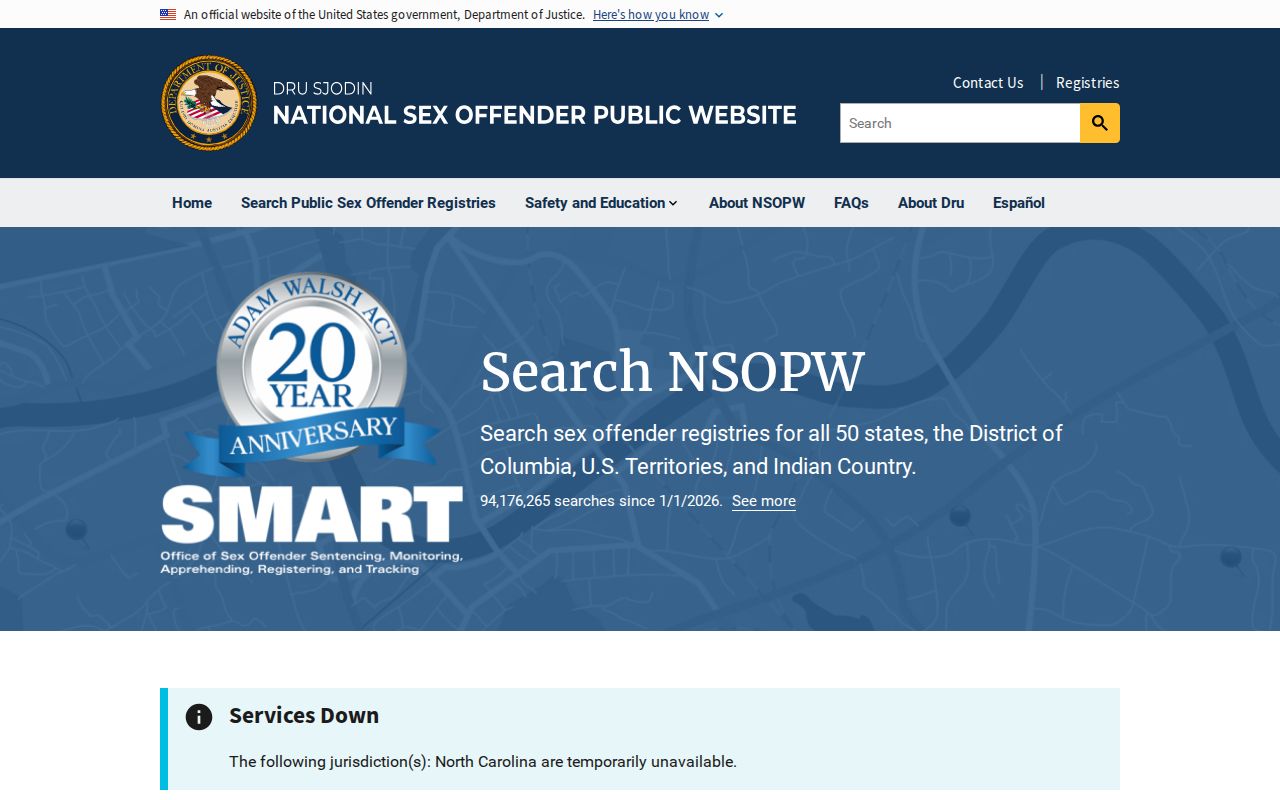
For Giles County households near the state line, that national search is a second layer, not a replacement for the current VSP profile.
Virginia Sex Offender and Crimes Against Minors Registry Searches
VSP offers name and location routes. Read and accept the live site's conditions, complete any captcha, and use the fields that fit the facts you know. Search results can change, and a blank or failed screen is not a formal no-record finding. Retry the search, change spelling carefully, and use the VSP public line if a technical or data question remains.
- Open the official VSP registry and read its conditions and lawful-use warning.
- Search the exact last name, then add a first name or known alias to narrow a broad result.
- Run a second search by Giles County, town, address, ZIP code, and available radius.
- Open a possible profile and compare identifiers, offense jurisdiction, status, and the verification or update date.
The live interface determines which controls appear. These are the fields documented in the Giles County research sweep:
| Field Label | Type | Required | Notes |
|---|---|---|---|
| Search by Name | Tab or mode | No | Opens the name route |
| Last Name | Text | Name mode | Try the record spelling and lawful known variants |
| First Name | Text | No | Narrows common-name results |
| Search by Location | Tab or mode | No | Opens address, town, ZIP, county, and radius controls |
| County | Dropdown | No | Select Giles |
| City or ZIP Code | Text or select | Location route | Use Pearisburg, Narrows, Rich Creek, or another known place |
| Radius and Map/List | Select and view | No | Use only the options displayed by the current site |
Note: Keep the search date and profile update date together so an older capture is never mistaken for current registry status.
Giles Registry Map Versus Name
Name searches help when the identity is known, but spelling, aliases, and name changes can hide a match. Map or place searches reveal disclosed locations within the chosen area, yet rural geocoding can be imprecise. A pin may fall near a road, parcel, or adjacent property rather than mark an exact point. Always read the profile text and VSP disclaimer instead of treating the map as a survey.
A no-result screen has several possible causes. The offense may not require public registration, a court may have granted statutory removal, the spelling or jurisdiction may differ, a source may lag, or the person searched may simply be someone else. Registry absence cannot establish that a person has no criminal history. For broader case research, use the Giles County Court Case Lookup and keep its purpose separate from the safety registry.
Do not infer a universal school, park, or home-distance rule from the radius tool. Virginia restrictions depend on the statute, offense, dates, and any individual court or supervision conditions.
Registry Profiles: What They Show
A Virginia public profile can combine identification details, statutory offense information, location fields, and a current registry status. It is not a full rap sheet. An offense description may quote another state's law, so do not translate it into a Virginia offense class without an authoritative decision. Read the conviction jurisdiction, statute, and date together.
| Name and aliases | Published identity names and known variants used to distinguish possible matches |
|---|---|
| Photo and descriptors | Photograph, sex, race, height, weight, hair, eyes, and scars, marks, or tattoos when lawfully displayed |
| Address and jurisdiction | Disclosed residence or jurisdiction data, subject to the registry's mapping and accuracy cautions |
| Offense and statute | Conviction description, statutory citation, conviction date, and jurisdiction |
| Registry identifiers | VSP or SOR identifiers and the precise registration or compliance label |
| Other public fields | Vehicle, work, or school data where Virginia law authorizes disclosure |
| Update details | Verification or profile update date and available contact or reporting links |
Read each field only for lawful safety awareness. A vehicle or workplace listing is a registry attribute, not an invitation to follow, contact, photograph, or interfere with anyone.
Giles Registry Status and Dates
Status terms must remain precise. An ordinary active registration is not the same as “wanted,” “noncompliant,” or “verification needed.” Do not rewrite one label as another or claim a new crime from a screen. If the status seems inconsistent with other facts, give VSP the profile identifier, the exact disputed field, and the date observed. Circulating an unconfirmed allegation can cause harm.
Update and verification dates are just as important. They help show how fresh a profile may be, but they do not promise that every location fact remains unchanged today. Search again before relying on an old capture. For a suspected reporting breach, use the official compliance channels rather than conducting an investigation yourself.
The VSP forms and services index is also captured in the assigned registry materials.
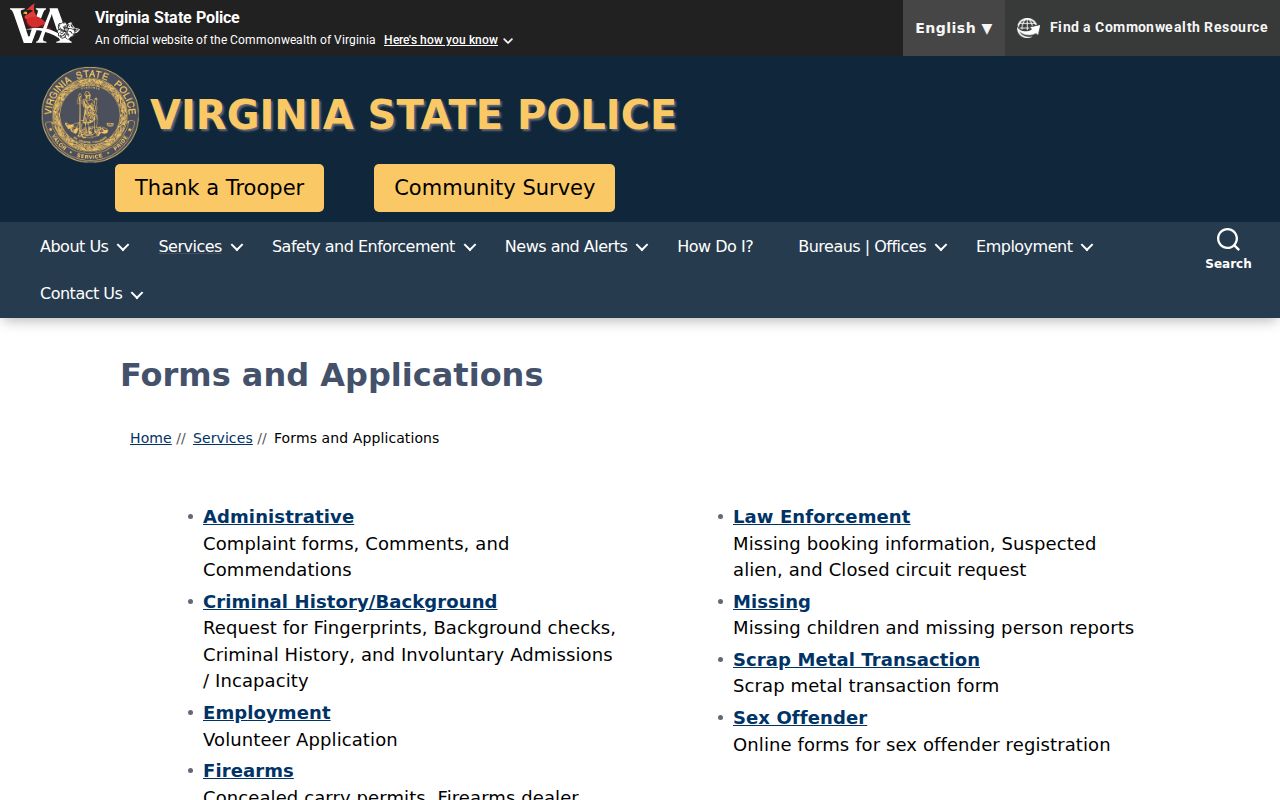
That state source helps route formal registry and criminal-history forms without implying that Giles County maintains a separate database.
Registration Levels and Duties in Virginia
Virginia uses offense-based statutory categories. The public system should not be reduced to a guessed federal Tier I, II, or III badge. Under Virginia's Registry Act, the offense, conviction date, repeat or sexually violent status, and later court action can affect duration and verification. Section 9.1-904 covers periodic verification. Sections 9.1-908 through 9.1-910 address duration and routes for relief.
| Virginia category | Public treatment | Duration and verification source |
|---|---|---|
| Sexually violent offense or status | Offense-based statutory category | Sections 9.1-902, 9.1-904, and 9.1-908; generally lifetime with more frequent verification |
| Other registration offense | Offense and date control | Sections 9.1-902 and 9.1-908; relief may require a petition under 9.1-910 |
| Juvenile or adjudication matter | Special statutory and court rules | Do not infer public eligibility or duration from adult rules |
Only the current statute and an authoritative court or VSP decision can resolve a specific person's duty. Amendments and offense dates matter. The profile is a public record of the status shown, not legal advice about when that status should end.
The assigned image from the official Virginia Code registry chapter preserves the governing source.
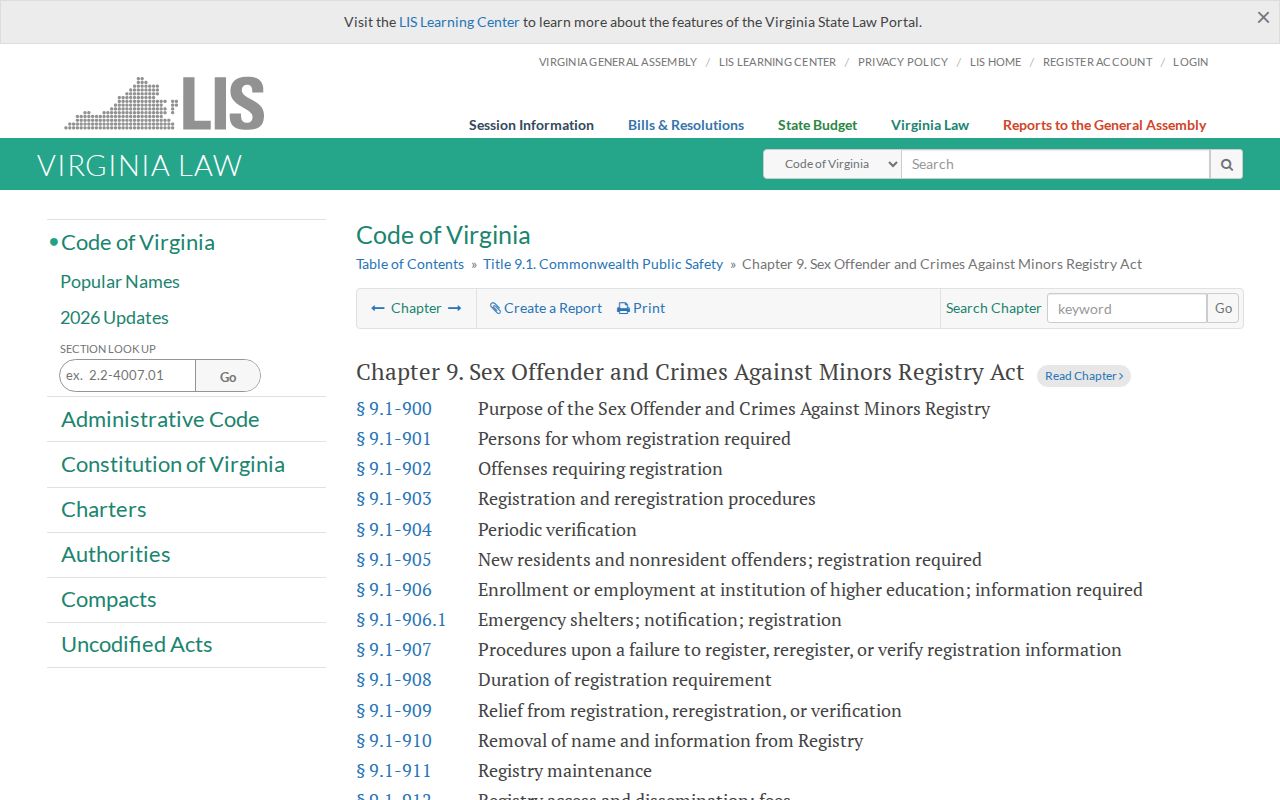
Its chapter structure shows why a current statutory category is more reliable than a simplified tier label.
Giles Registry Agency Roles
VSP manages the statewide registry, public search, records infrastructure, and statewide reporting line. The Giles County Sheriff's Office is the local route for registration or compliance questions, but no official Giles registration-unit hours, appointment procedure, fee, or direct phone was published in the research. Use the Giles County government directory to reach the sheriff and ask for the current registry contact before visiting.
Suspected noncompliance may be reported to law enforcement or the VSP Sex Offender Registry public line at (804) 674-2825. Give a profile identifier and the exact discrepancy. For an emergency or a crime in progress, call 911. Routine questions, old screenshots, or uncertainty about a map pin do not justify emergency dispatch.
No verified Giles sheriff app or local registry-alert tool was found. Use only notifications officially offered by VSP, NSOPW, or a public agency, and confirm what geographic area and event type each service actually covers.
Giles Registry Relief and System
Virginia's current registry platform grew from the Sex Offender Management System launched in October 2023. A January 2025 VSP CJIS newsletter reported 25,318 active registrants as of December 10, 2024 and noted that the system also tracked court-ordered and deceased removals. That statewide count is infrastructure context, not a Giles County count and not a measure of local crime.
Removal is not automatic merely because time has passed. Some registrants may seek petition-based relief under Section 9.1-910 after the applicable minimum, while Section 9.1-908 generally requires lifetime registration for sexually violent offenses and certain other categories. A court order, VSP implementation, and the law in effect for the case control the result.
The manifest's official Virginia expungement and sealing chapter illustrates a separate record-relief framework.
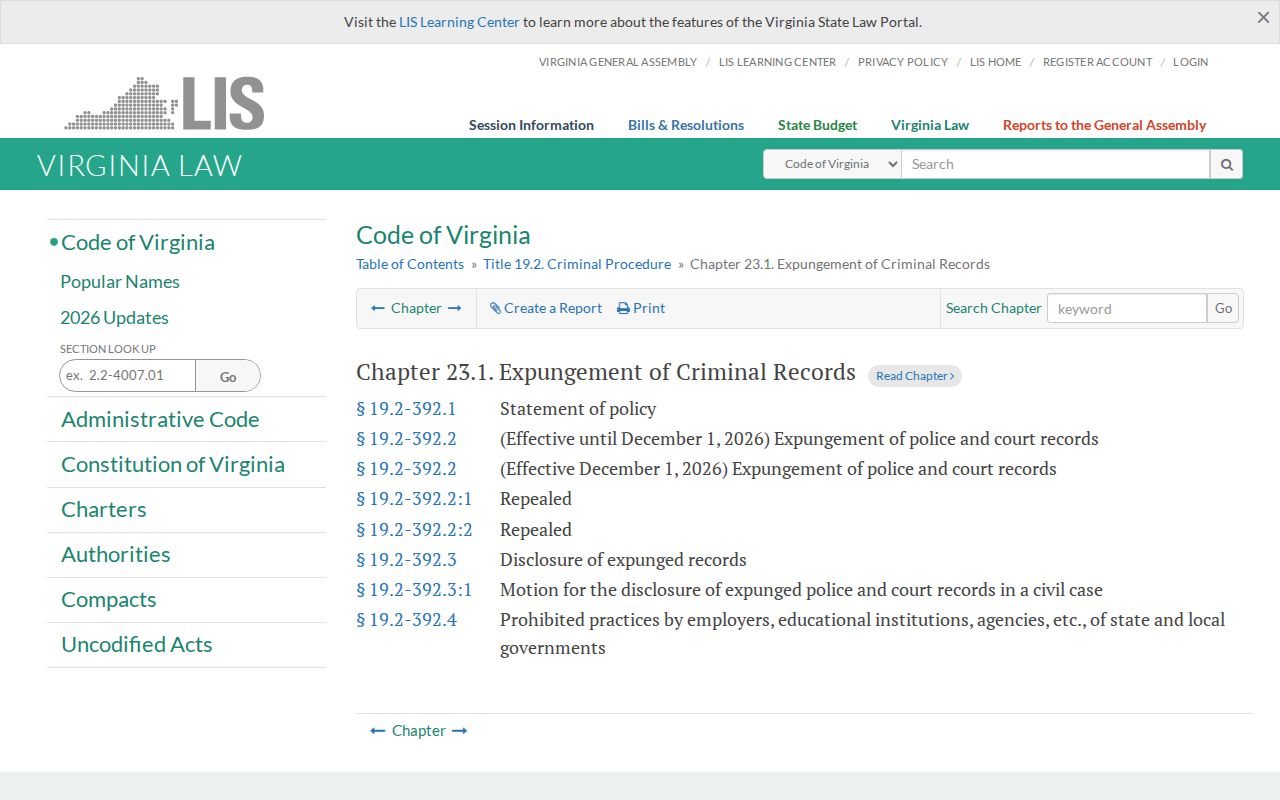
Expungement or sealing of a criminal record should never be assumed to erase a distinct registry duty; each legal process must be checked on its own terms.
Using Registry Information Lawfully
The registry exists for public safety and community awareness under Section 9.1-900. Giles County residents may use it to plan for personal or family safety and to understand disclosed conditions near a home, school, or park. Use the facts shown, note the date, and verify a concern through VSP or the sheriff. Never enter private property, confront a registrant or household member, or turn a map result into a public accusation.
Virginia registry dissemination and enforcement provisions appear in Sections 9.1-911 through 9.1-918. They protect access while setting legal bounds on misuse. Registry records may be incomplete or may change after a search, so the originating agency remains the source for current status.
Use the registry only for lawful safety purposes. Harassing, intimidating, or threatening a registrant or household through registry information may bring criminal or civil consequences under Virginia Code Title 9.1, Chapter 9. Do not use a profile for vigilantism, discrimination, trespass, or unwanted contact.
Note: A public registry result identifies a disclosed statutory status; it does not prove a new offense or authorize action against the listed person.